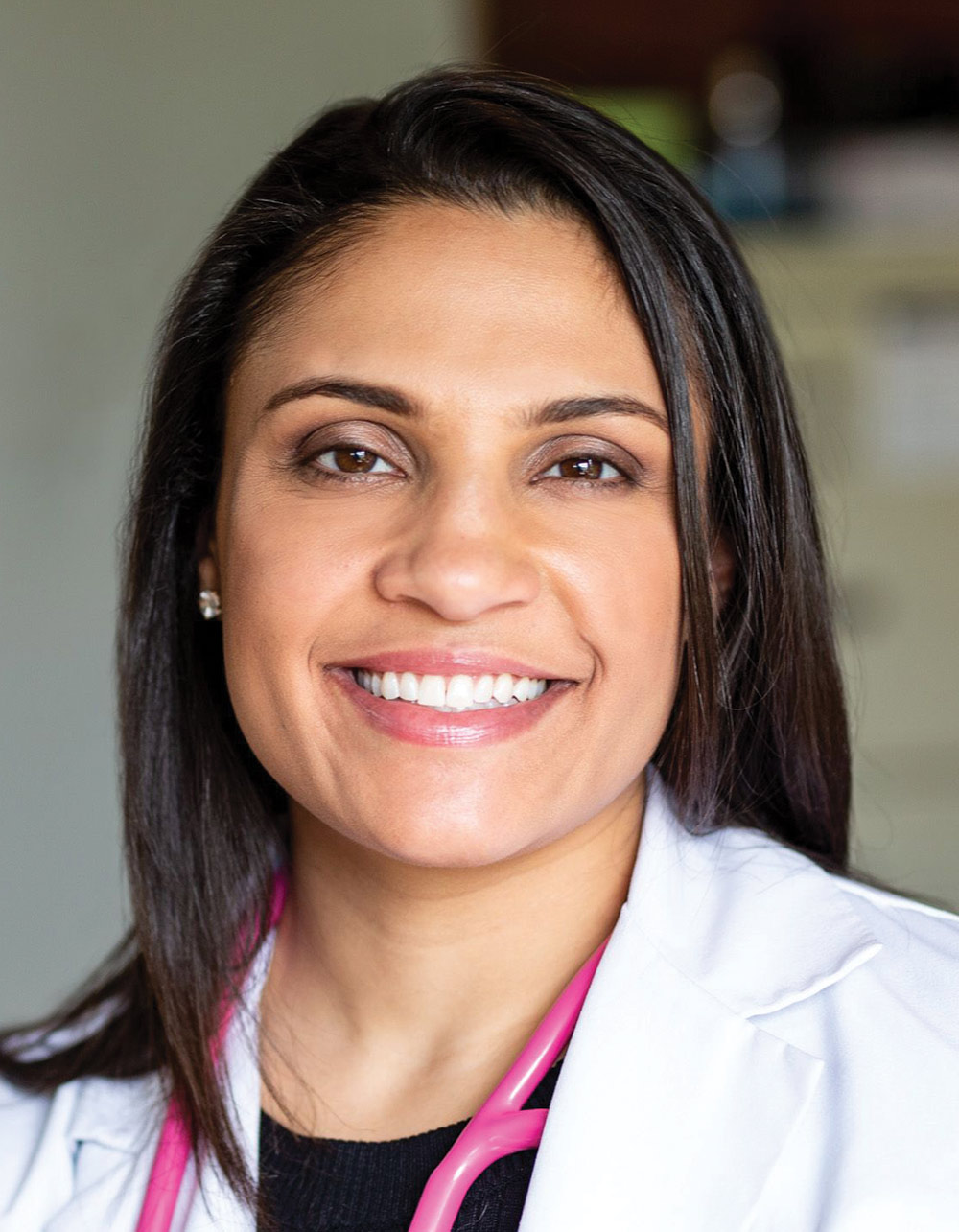
Clinical Advisory Board Interview Series · Interview by Dr. Natalie Marks
Most veterinarians in this country are general practitioners. They are the first call when something is wrong, the last face the family sees, and the people quietly absorbing the most complicated emotional and clinical decisions in this profession. Dr. Marisa Brunetti is one of them - and one of the most thoughtful generalists I know.
She is a small animal general practitioner and hospital owner, the Chief Veterinary Officer Emeritus of IndeVets, and a founding member of the OpenVet Clinical Advisory Board, representing general practice on the board.
The OpenVet Clinical Advisory Board is the panel of board-certified specialists and senior clinicians that provides direct medical oversight of OpenVet’s AI platform across oncology, neurology, internal medicine, emergency and critical care, radiation oncology, and general practice. I asked her five questions. Here is what she said.
1. What’s a clinical moment early in your career that still shapes how you practice today?
Oof. Thinking about this case still makes me sad inside. I was 4 months out from graduation, and had been left alone on a Saturday by the owner of the hospital. The day was crazy, but it was almost over. An obese bulldog came in for severe allergies and difficulty walking. I was too green to realize soon enough that just examining this bulldog was tipping him into a respiratory crisis, and I was behind in appointments, so he had to wait longer than he should have. The dog ended up arresting and I couldn’t get him back. There was no chance. I didn’t have the staff, or the skills at that time. This dog shaped the way I look at fear and anxiety in animals. It taught me to slow down when evaluating a pet, and even if you are behind you have to be present with that one patient so you can catch things. It also encouraged me to learn more about respiratory emergencies, appropriate sedation for these times, and how to successfully treat them. (Oh, I still don’t like them!)
2. Is there one patient, one specific animal, that changed how you think about what you do?
I was a veterinarian for 5 years, and still a hesitant surgeon. I liked surgery, but my anxiety kept me from truly enjoying it. I met a cat named Clover, a spunky orange and white tabby cat who lived as a barn cat and galavanted around a farm all day long. Unfortunately, Clover presented to me because he had a severe degloving injury where all the tissues had been ripped from his rostral chin distally. He was stable but needed his chin reattached! Referral was not an option for Clover’s owners, so I faced my fear and said I would try this surgery that I certainly wasn’t trained for specifically. Clover did amazing! I also placed my first esophageal feeding tube and saw Clover every 7 days until he was completely healed. Clover made me realize that 1 - cats are exceptional healers and 2 - if you just go back to your surgical principles and have just a little confidence, you are capable of a lot!
3. In your specialty, what’s a case type that keeps general practitioners up at night, and what do you wish they knew?
As a general practitioner, sick patients that I can’t diagnose quickly and who don’t have the ability to refer keep me up the most. Of course, when I speak to vet students and mentor younger vets I always tell them that you can’t solve every problem that day! I want my fellow GPs to know that we sometimes have an impossible job, and you are all doing the best you can with the resources and knowledge you have. You can’t solve everything in 20 minute appointment!
4. Some people say veterinarians should just use general-purpose AI like ChatGPT. What’s your response?
I don’t even trust ChatGPT for answers to trivial questions and I don’t use it for medical advice for myself. Knowing that, I definitely wouldn’t trust it with my veterinary patients. Veterinary medicine has waited long enough to have their own dedicated platform that is built on expertise, research, and integrity, with veterinarians at the helm. 5. If you could send a message to every veterinarian about the next decade of this profession, what would you say? There’s going to be more of us! And we have to look to the new generation for where our profession is going. More pets will get insurance and we will be able to give more care, decreasing our moral injury and compassion fatigue. There will be better mentorship and collegial support, and we will set better boundaries for ourselves so we can care for our patients better. We will have better tools that make our working lives easier - AI scribes, OpenVet, and much more, I am sure - so we can spend more time outside of work doing the things we love!
About the OpenVet Clinical Advisory Board
Led by Chief Veterinary Officer Dr. Natalie Marks, the OpenVet Clinical Advisory Board is the panel of board-certified specialists and senior clinicians that provides direct medical oversight of OpenVet’s AI platform. The board spans oncology, neurology, internal medicine, emergency and critical care, radiation oncology, and general practice - and exists so that every clinical recommendation surfaced by OpenVet is species-aware, evidence-based, and clinically verifiable.
Dr. Brunetti represents general practice on the CAB, ensuring OpenVet’s AI reasons the way a generalist actually works - in 20-minute appointments, with imperfect information, often without referral options, often as the only veterinarian in the building. Her dual experience as a hospital owner and former Chief Veterinary Officer of IndeVets brings the operational realities of generalist medicine into how the platform is built.
One of an ongoing series of conversations with members of the OpenVet Clinical Advisory Board.
Not on OpenVet yet? If you're a licensed veterinarian, access is free. No trial period, no credit card, no sales call. Signup at www.OpenVet.ai Get Access Today!