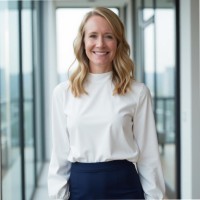
Clinical Advisory Board Interview Series · Interview by Dr. Natalie Marks
Most clinicians stay in clinical practice. A few trade clinical practice for operational leadership and lose touch with the floor. Dr. Rae Hutchins is in a third, rarer category - she carried the discipline of internal medicine residency into pharmacy and operations and now applies clinical reasoning at the scale of a national veterinary platform. She is board-certified in internal medicine (DACVIM), serves as Chief Veterinary Officer at Wedgewood Pharmacy, and is a founding member of the OpenVet Clinical Advisory Board.
The OpenVet Clinical Advisory Board is a panel of board-certified specialists and senior clinicians that provides direct medical oversight of OpenVet’s AI platform across oncology, neurology, internal medicine, emergency and critical care, radiation oncology, and general practice.
I asked her five questions. Here is what she said.
1. What’s a clinical moment early in your career that still shapes how you practice today?
During my residency, my mentors instilled a habit that still anchors how I practice: question everything. Not in a skeptical-for-the-sake-of-it way, but in a disciplined, clinical reasoning approach. We didn’t rely on rigid algorithms - we used them as a starting point, then asked why at every step. If a result didn’t fit, we didn’t just accept it - we interrogated it. Does this make physiologic sense? Do I need this diagnostic, or am I ordering it out of habit?
That mindset - pattern recognition paired with critical thinking - has stayed with me. It’s what keeps medicine precise and adaptable. And candidly, it has allowed me to shift my career in unanticipated directions because that skill set applies widely across operations, pharmacy, and beyond.
2. Is there one patient who changed how you think about what you do?
Yes - Star, a young black English Labrador, initially presented with what was thought to be a hepatic tumor shortly after being neutered. It turned out to be a septic portal vein thrombus, which completely shifted both the diagnostic and therapeutic approach. Clinically, it was a powerful lesson in advanced imaging, anticoagulation, and avoiding premature anchoring to a diagnosis.
But what stayed with me even more was the family. Star belonged to a child with special needs, and the depth of that human-animal bond shaped every decision we made. It pushed me to think beyond medicine alone - to lean into communication, teamwork, and creativity in how we approached care.
Despite an initially poor prognosis, Star did incredibly well and lived for years. That case reinforced that what we do is rarely just about solving a medical puzzle - it’s about navigating that puzzle alongside the people who love the patient.
3. In your specialty, what’s a case type that keeps general practitioners up at night, and what do you wish they knew?
The really sick, complex cases - the ones where everything feels like it’s happening at once - are often the most overwhelming. What I wish more people were confident in is this: keep it simple.
Start with a clear problem list. Build your differentials. Let them guide your diagnostics. Communicate clearly with the team and the client. Even the most complicated cases become manageable when you break them down this way. Occam’s razor applies more often than we think—the simplest explanation is often the right one. Complexity doesn’t require a complicated approach; it requires a structured one.
4. Some people say veterinarians should just use general-purpose AI like ChatGPT. What’s your response?
Not all AI is the same. Purpose-built, domain-specific AI can meaningfully support clinical decision-making when grounded in workflow and evidence, whereas general-purpose AI is best used as an informational aid. Neither replaces examination, judgment, or accountability. The value of AI isn’t in using it - it’s in using it critically.
5. If you could send a message to every veterinarian about the next decade of this profession, what would you say?
The future of veterinary medicine will demand more - not just medically, but cognitively and emotionally. The veterinarians who thrive will be those who invest in three things: critical thinking, communication, and teamwork. Technical knowledge will always matter, but the ability to think clearly amid uncertainty, communicate effectively with clients and colleagues, and function as part of a strong, aligned team - that’s what will define great care.
If we can strengthen those skills across the profession, we don’t just improve outcomes - we make the work more sustainable and meaningful.
About the OpenVet Clinical Advisory Board
Led by Chief Veterinary Officer Dr. Natalie Marks, the OpenVet Clinical Advisory Board is a panel of board-certified specialists and senior clinicians that provides direct medical oversight of OpenVet’s AI platform. The board spans oncology, neurology, internal medicine, emergency and critical care, radiation oncology, and general practice, and exists to ensure that every clinical recommendation surfaced by OpenVet is species-aware, evidence-based, and clinically verifiable.
Dr. Hutchins guides OpenVet’s internal medicine reasoning and pharmacologic safety logic, ensuring the platform reasons about chronic disease management, drug-drug interactions, and dosing decisions as a board-certified internist would. Her dual experience - as a clinician and as an operator at scale - helps OpenVet remain both clinically rigorous and operationally usable in real-world practice.
* One of an ongoing series of conversations with members of the OpenVet Clinical Advisory Board.