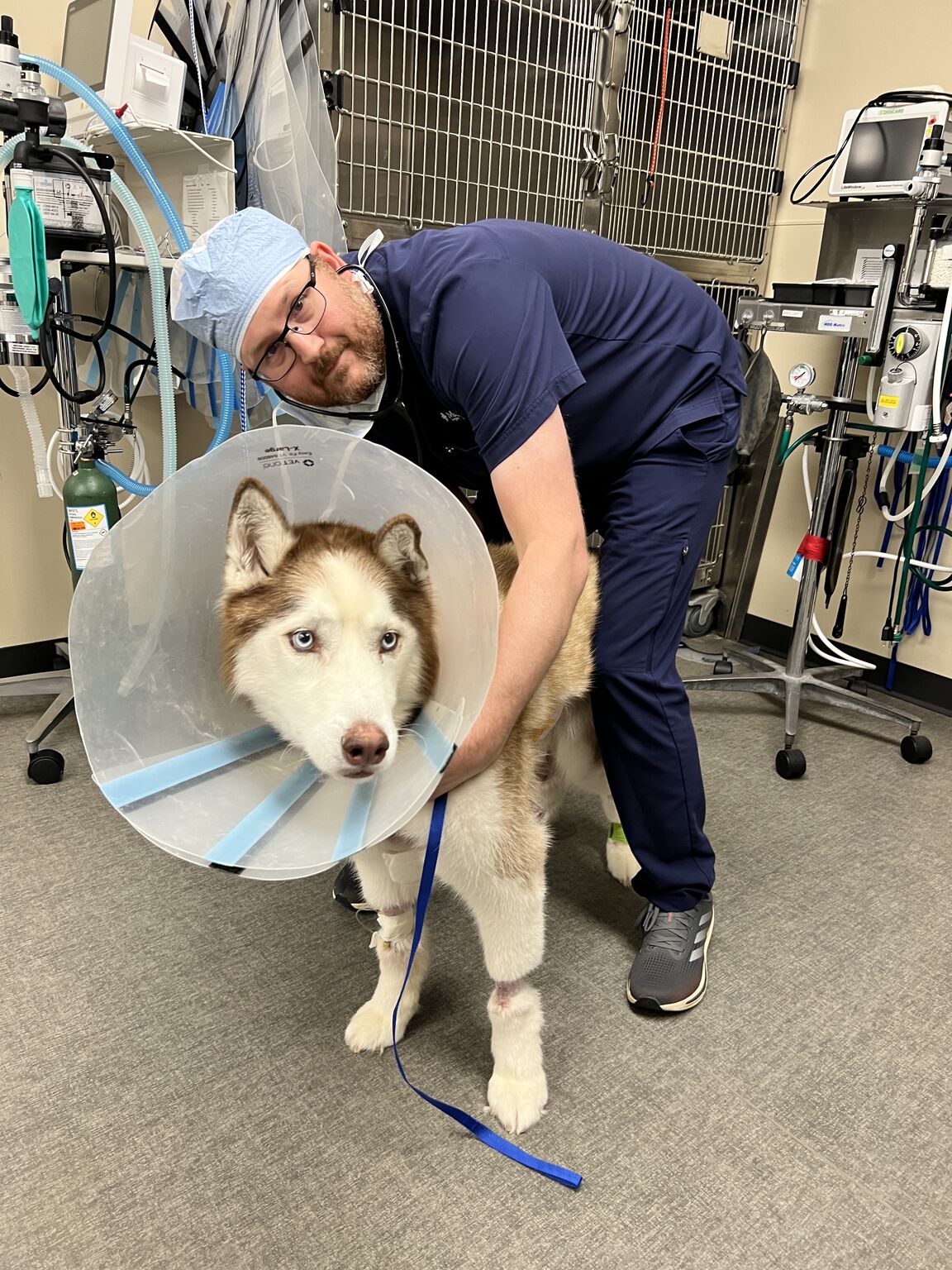
Veterinary medicine runs on people doing careful work under pressure. And because people are human, sometimes a single setting is entered incorrectly, and the next few minutes decide everything. Last week, one of those minutes belonged to a 31-kilogram dog recovering from open-chest surgery. And the reason this story has a happy ending is a sharp, calm veterinarian who did everything right.
What happened
Overnight, the patient was being maintained on medication through a CRI machine - a constant-rate infuser. The unit was accidentally set to deliver in micrograms instead of nanograms, a thousand-fold difference. The result was a massive overdose of lidocaine.
The OpenVet user - the dog's veterinarian - caught it. That's the moment the case turns: a clinician paying close enough attention to spot the error and move immediately. Lidocaine toxicity is dangerous and fast-moving — it can drive central nervous system excitation, seizures, and cardiac arrest, and there is no specific antidote. What there is is a well-established emergency approach: intravenous lipid emulsion therapy, which acts as a "lipid sink," pulling fat-soluble drugs like lidocaine back out of tissues.
Knowing time was the enemy, the veterinarian consulted OpenVet. OpenVet surfaced the evidence-based protocol and the calculated intralipid dose for that specific patient — and the clinician acted on it without hesitation. In his own words, the dog was receiving treatment "within 5 minutes of typing it into OpenVet." The patient made a complete recovery. Because the right person, doing the right things, had the right support exactly when it counted.
Why this case matters
The point of this story is not that an AI replaced a clinician. It's the opposite. A trained veterinarian recognized the error, made the call, and stayed in command of every decision. OpenVet's job was to put accurate dosing and evidence in front of that clinician fast enough to matter. The clinician remained autonomous and the decision-maker. That distinction is the whole reason OpenVet exists. We believe AI should amplify clinical judgment, never replace it, with safety constraints, transparent reasoning, and the clinician should be sovereign over every decision.
Dr. Natalie Marks, Chief Veterinary Officer, OpenVet: "What I love about this case is that it's a clinician's win first. The doctor caught the error, knew lidocaine toxicity was an emergency, and acted. OpenVet's role was to remove the friction between knowing what to do and doing it — getting the right protocol and dose into their hands within minutes, not after a frantic search. That's exactly how this platform elevates medicine."
Dr. Andrew Heller, Co-founder and CEO, OpenVet Clinical Advisory Board: "Every vet has felt that gap between a crisis and the reference you need to handle it. Speed and accuracy aren't competing goals here — when the evidence is trustworthy and it's instant, you get to give better care under pressure. This is a clean example of a tool doing the unglamorous, essential thing: backing up a good clinician at the worst possible moment."
The harder truth underneath
We're human. Things happen. A setting gets bumped from nanograms to micrograms at 2 a.m., and a life hangs in the balance of someone catching it. That's not a failure of any one person; it's the reality of medicine, and it's why the support around clinicians has to be both accurate and accessible to everyone, not just the well-resourced few. That's a founding commitment for us: accurate evidence and clinical support should be free and accessible to all.
A word on safety
A story like this is exciting. It's also exactly the kind of story we hold ourselves accountable for - because the same tool that helps in an emergency carries real responsibility in how it's built. OpenVet is designed around defense-in-depth: multiple independent layers of safeguards, adversarial "red-team" testing by experts who look for unsafe behavior before it ever reaches a clinic, and a documented safety case for the system. Those commitments live in our Veterinary AI Safety Charter.
Cases like this are why we're so disciplined about safety. The moment AI touches a real patient, 'impressive' isn't the bar - 'safe, accurate, and accountable' is. We built OpenVet so the clinician is always in command and the system earns their trust every single time, including when no one is watching. A tool you can lean on in an emergency is only worth building if you can trust it on an ordinary Tuesday too."
With gratitude to the veterinarian who acted fast, and to the OpenVet Clinical Advisory Board, whose expertise shapes how this system reasons and where it holds back.
OpenVet — the AI hospital for every animal on earth. Learn more or request access at www.openvet.ai