Your dog ate something off the counter and it's 11pm. Your options are an emergency room visit that starts around a thousand dollars, waiting until morning and hoping, or your phone.
Most people pick the phone. I think that single fact explains more about the future of animal health than any conference keynote, and the industry is mostly not looking at it.
The supply side is constrained and contested. Mars Veterinary Health projects a shortfall of 14,000 to 24,000 companion-animal veterinarians by 2030; a 2024 AVMA-commissioned workforce study pushes back and forecasts no dire shortage. Reasonable people disagree about 2030. Nobody disagrees about tonight: after hours, in most of the country, there is no affordable professional to ask.
Regulation narrows the funnel further. In 22 states, a veterinarian legally cannot establish a relationship with your pet (the VCPR, the prerequisite for diagnosing or prescribing) without an in-person exam. Only seven states plus DC allow it to be established virtually. Before anyone reaches for the pitchfork: the in-person rule is not pure protectionism. Animals hide pain, they can't describe symptoms, and a hands-on exam catches things a webcam never will. A rule written in the era of farm calls has real clinical logic. It also has a side effect its authors never intended: in 2026 it doesn't push owners toward exam rooms, it pushes them toward the open internet.
Venture capital noticed this gap years ago and mostly face-planted in it. Fuzzy, a subscription pet telehealth company, raised $80.5 million and then shut down overnight in June 2023, leaving members without access to their prescriptions. The consumer pet-app graveyard has a consistent pattern: pet health worry is intense but infrequent, which is a terrible shape for a subscription, and the apps that survive tend to drift toward selling products, which quietly corrupts the advice.
Now generative AI is filling the same gap at zero marginal cost, and I hold two thoughts about that at once. First, it is already useful; a decent triage of “monitor overnight” versus “go in now” at 11pm is real value that the current system simply does not offer. Second, the failure modes are ugly and specific. Dosing math where a small mistake matters. Species differences a general model glosses over (the flea product that is routine for a dog and has no safe dose for a cat). A confident “this can wait” delivered to an animal that is masking how sick it is. In consumer software a wrong answer is a refund. Here it can be a dead animal, and the animal never got a vote.
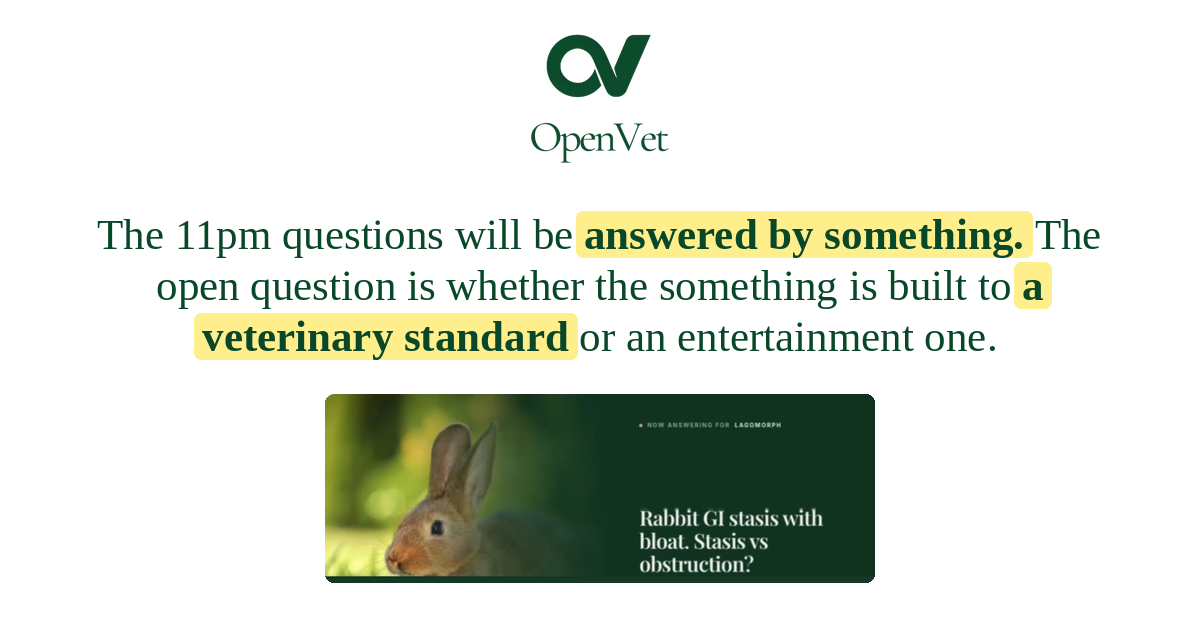
The uncomfortable version of my conclusion: the chat interface is the easy 80% of this problem, and it has been commoditized. The hard 20% is everything underneath. Knowing what you don't know. Escalating early and specifically. Being accountable to a clinical standard rather than an engagement metric. The demand is not going back in the bottle; the 11pm questions will be answered by something. The open question is whether the something is built to a veterinary standard or an entertainment one.
Curious what the vets reading this see in the exam room: has the internet-advised patient gotten better or worse in the last two years?
Sources
Mars Veterinary Health, Characterizing the Need
AVMA, No dire shortage of veterinarians anticipated